
MINIMUM SYSTEM REQUIREMENTS
Leading through darkness with a system built for war.

THE ANCHOR
The wind racing down the mountain range doesn’t just blow; it searches. It finds the gaps in the casing and the weaknesses in the glass. Out here in the high desert, the wind is a physical presence, a cold, scouring force that reminds you exactly where you sit on the food chain.
19:42.
The lights don’t just flicker. There is a mechanical sigh, a deep, resonant thrum of a transformer’s heart giving up miles away, and then, absolute zero. The grid fails.
The silence that follows a power outage in a remote house is heavy. It’s not a peaceful quiet; it’s the sound of the modern world’s life support being pulled. It’s the sudden absence of the hum that masks our own thoughts. For a man on edge, this is the moment the internal static usually spikes to a deafening roar.
In the past, I would have reacted with a grunt of annoyance, a verbal leak of my own frustration. I would have fumbled for my phone, used the jittery light of the screen to find the couch, and waited. I would have been a passenger in my own home, complaining about the lack of signal, radiating a low-level heat that everyone else would have had to manage.
Tonight, the internal static is quiet. The perimeter is breached, and the anchor has to hold.
THE PROTOCOL
The daughter starts to cry from the next room. It’s that specific, high-pitched frequency of a child who has just lost her visual coordinates. It’s the sound of hardware redlining.
In the kitchen, I hear my wife. I don’t need light to see her movements; I can hear the sharp, jagged rhythm of her reaching for a drawer. She’s moving too fast. Her breath is shallow. She’s bracing for the chaos, already calculating the inventory of candles and the declining temperature of the fridge. She’s preparing to manage the crisis because she’s spent years believing she’s the only one with a light.
I move before she can find the matches.
“Stay there,” I say.
My voice is low, calibrated. It’s not a shout; it’s a broadcast. I’m establishing frequency.
“I’ll get Elle.”
I don’t fumble. I know the layout of my fortress—every transition of the flooring, every corner of the drywall, because I’ve walked it countless times. I reach my daughter’s room in eight deliberate strides. I don’t “comfort” her with frantic energy or high-pitched reassurances. I simply pick her up and let her feel the steady, boring cadence of my pulse against her.
I am the physical evidence that the dark isn’t a threat. I don’t say anything; she knows.
THE SECURITY CHECK
Before I head back to the living room, I detour to the mudroom. It’s a detail most men overlook in a blackout, but the “Fortress” is a mindset, not just a metaphor.
I set Elle down for a second and reach for the door. I don’t just check the lock; I feel the deadbolt engage with a heavy, metallic clack. I move to the back entry. Secured. I check the windows. I am closing the gaps the wind was searching for.
A woman cannot be truly soft if she thinks the perimeter is porous. She needs to know the walls are thick and the man at the gate is awake.
THE TEST
I bring Elle into the living room. By the time my wife has candles lit, I’ve already engaged the secondary systems. I’m at the woodstove. I’ve been prepping the kindling for a week, waiting for a night exactly like this.
My wife is standing by the counter, holding the candle like a weapon. She’s still vibrating with the residue of the day, her nervous system mirroring the storm outside. She looks at me, and I see the “Teeth” flash.
“You knew the storm was coming,” she says, her voice sharp, testing the structural integrity of my calm. “Why didn’t you pick up a generator on your way home? We’re going to have to throw out everything in the fridge.”
It’s a lunge. It’s a test to see if I’ll join her in the chaos, to see if I’ll snap back, defend my ego, and turn the blackout into an argument.
I don’t fall for it. I don’t even look up from the fire. I absorb the strike, let it pass through me, and smash into the floorboards. I don’t give her a mirror to her own stress; I give her a different reality to inhabit.
My voice is steady. “The woodstove will have this room at seventy in ten minutes. Get the blankets and lay them in the living room. We’re having a picnic.”
Tonight isn’t a blackout; it’s an event.
I pause, smile, then look her in the eye.
The silence that follows is different now. I see her shoulders drop two inches. I see the jaggedness in her eyes smooth out. The “teeth” that defensive hardness she carries when she thinks she has to be the one to hold it all together simply vanishes. She realizes she doesn’t have to be the architect of our survival. She doesn’t have to lead. She just has to be a mother and a wife.
THE TENSION
20:30.
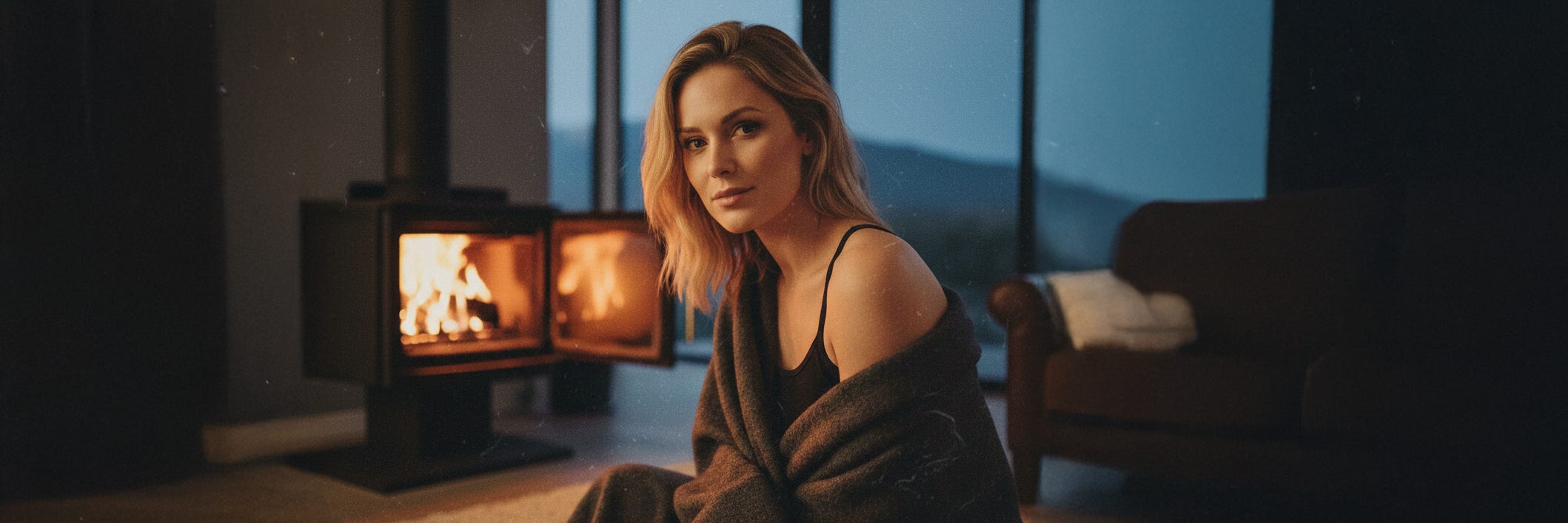
Our daughter is asleep, curled into a nest of wool blankets nearby. The house is actually warmer than it was before. The heat from the woodstove is a different kind of warmth; it’s visceral, ancient.
The light is orange and flickering—honest. It hits my wife’s face as we sit together on the floor, leaning against the couch. She isn’t checking a mental list. She isn’t scrolling through a dead piece of glass. She is watching me.
Most men wait for the lights to come back on to feel powerful. They think their authority comes from the “Trade” or the paycheck. They don’t realize that the most potent version of a man is the one who remains an anchor when systems fail.
I move toward her. I don’t ask if she’s okay. I don’t ask if she needs anything. I find her in the dark and pull her into the space I’ve cleared. In the flickering light, there is no work, no variables, no internal static. There is only the man and the woman he protects.
The tension in the room is a physical weight, but the gravity has shifted. It is no longer in a state of crisis; it is a magnetic pull. Her heart rate rises now, not out of fright, but in a rhythmic response to the man who stood between her and the dark.
She isn’t leaning into someone who checked a box. She is leaning into the man who governed the silence.
We lie next to each other on the floor of the fortress, the wool blankets a barrier against the cold stone of the world outside. In the flickering orange glow, the variables have all been solved. There is only the rise and fall of her breath and the home she has cultivated within the walls I protect.
This isn’t just another predictable evening lost to the static of a screen. This is an event. This is the story she will tell herself about the man who kept the fire lit when the world went black.
THE CALIBRATION
21:15.
The grid is still dark. The wind is still howling off the ridge, searching for weakness. But inside the fortress, the climate is perfect.
I don’t wait for instructions. I don’t wait for her to tell me she was scared or cold. I owned the environment before the darkness could settle. I secured the doors, and I lit the fire.
The young version of me would have been a shadow, a ghost waiting for light. The man I am is the one who keeps the fire lit.
The fortress is secure.